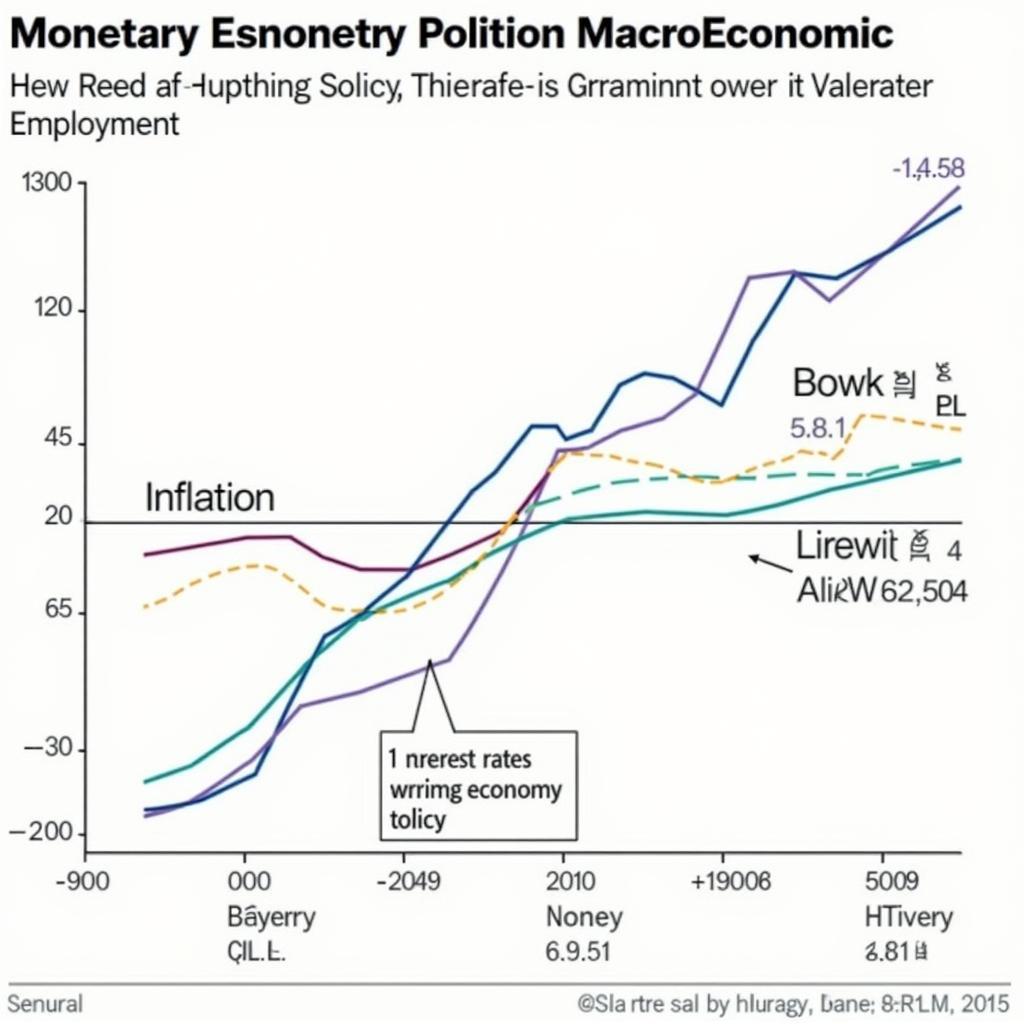
Monetary policy plays a crucial role in maintaining macroeconomic stability, directly impacting inflation, economic growth, and unemployment rates. This article delves into monetary policy, its role in the macroeconomy, its instruments, and the challenges in its implementation.
The Role of Monetary Policy in the Macroeconomy
Monetary policy encompasses the measures employed by a central bank to influence money supply, interest rates, and credit, aiming to achieve macroeconomic objectives. Key goals typically include price stability (inflation control), sustainable economic growth, and full employment. Monetary policy impacts the economy by influencing consumer spending and investment. Low interest rates encourage borrowing for consumption and investment, stimulating aggregate demand and fostering economic growth. Conversely, high interest rates curb spending and investment, helping to control inflation.
Monetary policy influencing the macroeconomy
Instruments of Monetary Policy
Central banks utilize various tools to implement monetary policy. Some common instruments include:
- Open Market Operations (OMO): Buying or selling government bonds to increase or decrease the money supply.
- Reserve Requirements: Mandating the percentage of deposits commercial banks must hold at the central bank.
- Discount Rate: The interest rate at which the central bank lends to commercial banks.
- Refinancing Rate: The rate at which the central bank lends to commercial banks for refinancing purposes.
- Window Guidance: Providing guidance and recommendations to commercial banks on lending practices.
- Exchange Rate Management: Intervening in the foreign exchange market to adjust the exchange rate.
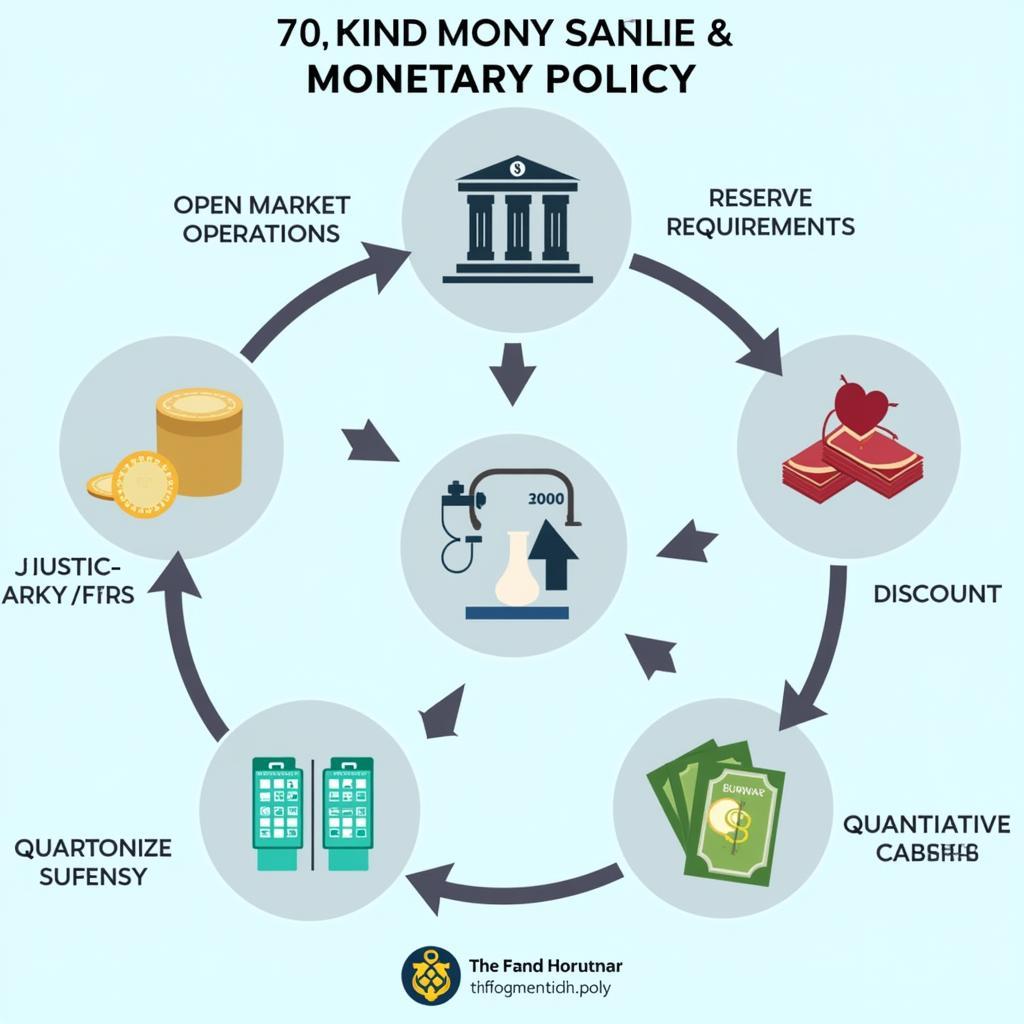 Monetary policy instruments
Challenges in Implementing Monetary Policy
Effective monetary policy implementation faces several challenges:
- Policy Lags: The impact of monetary policy on the economy often experiences a time lag, making prediction and adjustment difficult.
- Global Economic Instability: External factors like commodity price fluctuations and international financial crises can affect monetary policy effectiveness.
- Inflation Forecasting: Accurately predicting inflation is a major challenge, impacting appropriate policy decisions.
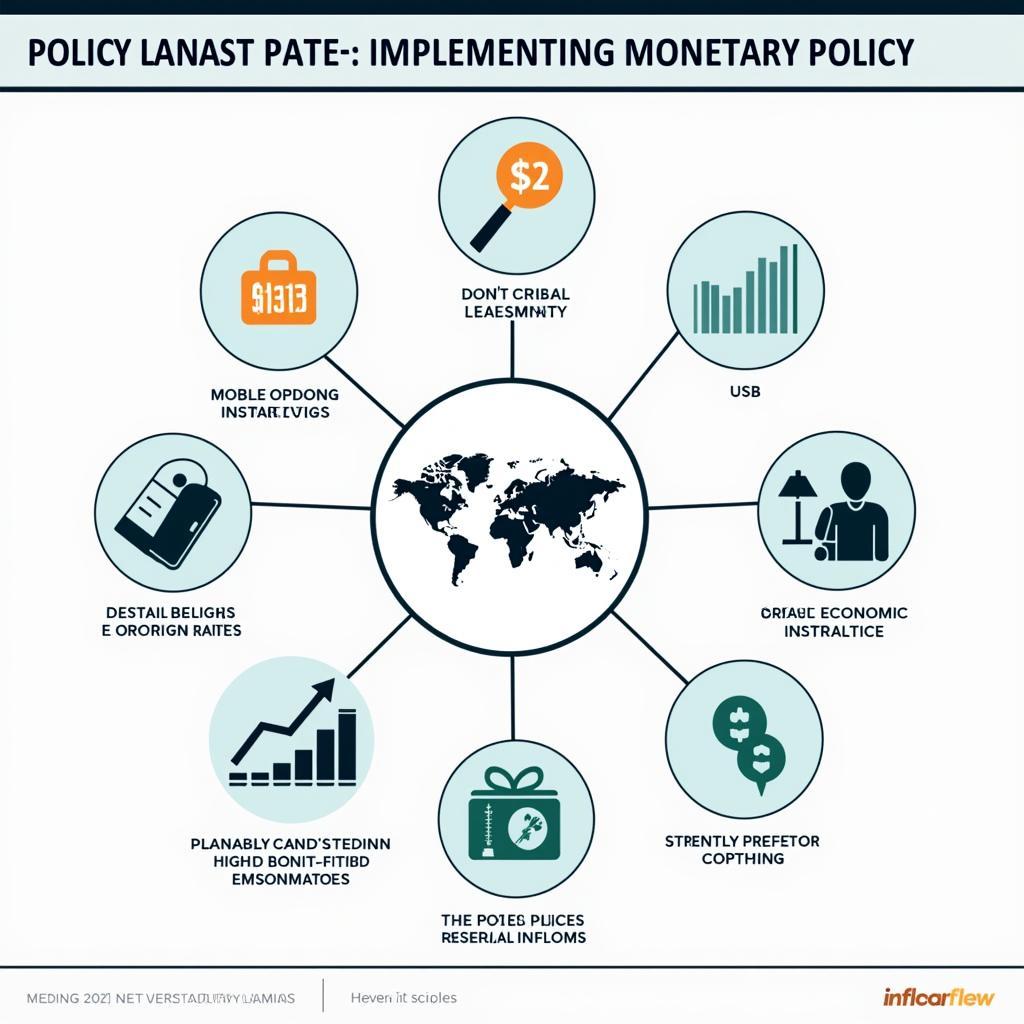 Challenges in implementing monetary policy
According to Dr. Nguyen Van A, an economist at the National Economics University, “Monetary policy management requires flexibility and timeliness, based on thorough analysis of domestic and international economic conditions.“
Mr. Tran Van B, Research Director at the Vietnam Institute for Economic and Policy Research, also stated: “Close coordination between monetary policy and other macroeconomic policies is necessary for optimal effectiveness.“
Conclusion
Monetary policy plays a key role in macroeconomic stability. Understanding the tools and challenges in implementing monetary policy is crucial for making informed policy decisions, contributing to sustainable economic development.
FAQ
- What is monetary policy?
- What are the main objectives of monetary policy?
- What tools does the central bank use to implement monetary policy?
- What are the challenges in implementing monetary policy?
- How does monetary policy affect inflation?
- What is the relationship between monetary and fiscal policy?
- What is the role of the central bank in implementing monetary policy?
For assistance, please contact us at Phone: 0968239999, Email: [email protected] or visit our address: No. TT36 – CN9 Road, Tu Liem Industrial Park, Phuong Canh Ward, Nam Tu Liem District, Hanoi. We have a 24/7 customer service team.









