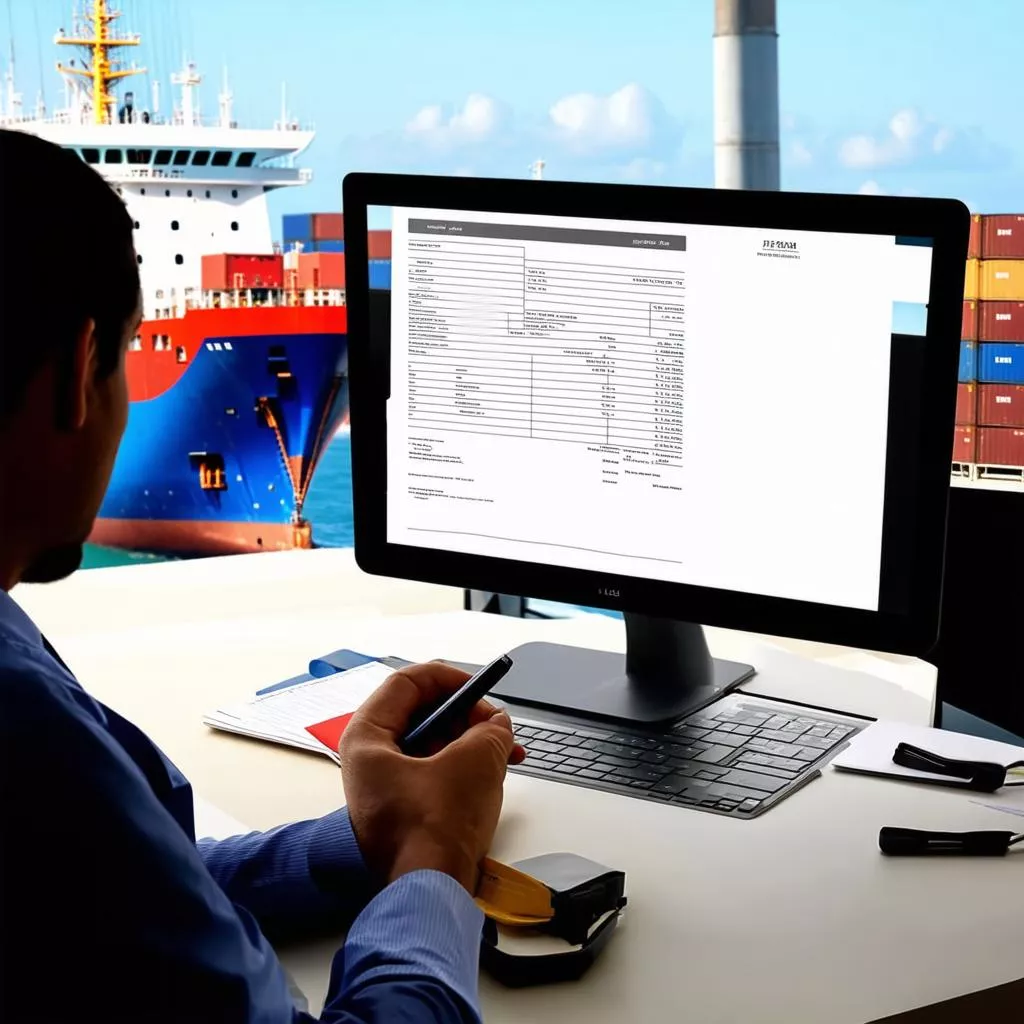
“Where’s my shipment?” This seemingly simple question is a common concern for many cargo owners when goods are transported by sea. In a vast ocean of information, how can you track your ocean freight bill of lading and gain peace of mind about your precious cargo’s journey? This article will help you unlock the mystery!
Checking a Bill of Lading
The Importance of Tracking Your Ocean Freight Bill of Lading
Bill of Lading – The Key to Unlocking Information
Just like your airline ticket, the ocean freight bill of lading (B/L) is proof of the contract of carriage for goods transported by sea. It contains all the crucial information about the shipment, from the shipper’s and consignee’s names and addresses to the ports of origin and destination, type of goods, quantity, weight, and more.
Tracking your ocean freight bill of lading is like using the B/L as a key to unlock a wealth of information about your shipment’s journey.
Unmissable Benefits
According to logistics expert John Smith in his book “Logistics Management in the Digital Age,” tracking your bill of lading offers several practical benefits:
- Real-Time Tracking: Monitor your cargo’s route and estimated time of arrival at the port.
- Proactive Business Management: Efficiently plan your receiving schedule and customs clearance procedures, avoiding unexpected delays, storage costs, and demurrage charges.
- Risk Mitigation: Quickly identify potential issues such as shipment delays, loss, or damage, allowing for timely solutions.
Decoding the Secret: How to Track Your Ocean Freight Bill of Lading
To track your shipment using the bill of lading, you can utilize several methods:
- Visit the Carrier’s Website: Most major shipping lines offer online B/L tracking services on their websites.
- Use Online Tracking Websites: Several websites specialize in providing international shipping information, including:
- VesselFinder
- MarineTraffic
- SeaRates
- Contact the Carrier or Freight Forwarder Directly: While more time-consuming, this method ensures you receive the most accurate and comprehensive information.
Frequently Asked Questions
1. How can I find out which carrier is transporting my goods?
The carrier’s information is usually clearly stated on the bill of lading. If you can’t find it, contact the seller or freight forwarder for assistance.
2. Can I track a shipment using the name of the goods?
Unfortunately, tracking shipment information requires the bill of lading number.
Conclusion
Tracking your ocean freight bill of lading is essential for effective cargo management. We hope this article has provided you with valuable information.
Do you have other questions about maritime transport, customs procedures, or finding the right trucks for your logistics operations? Don’t hesitate to contact XE TẢI HÀ NỘI for a free consultation!
Hotline: 0968 239 999
 Cargo Transportation by Sea
You can also explore related articles:









