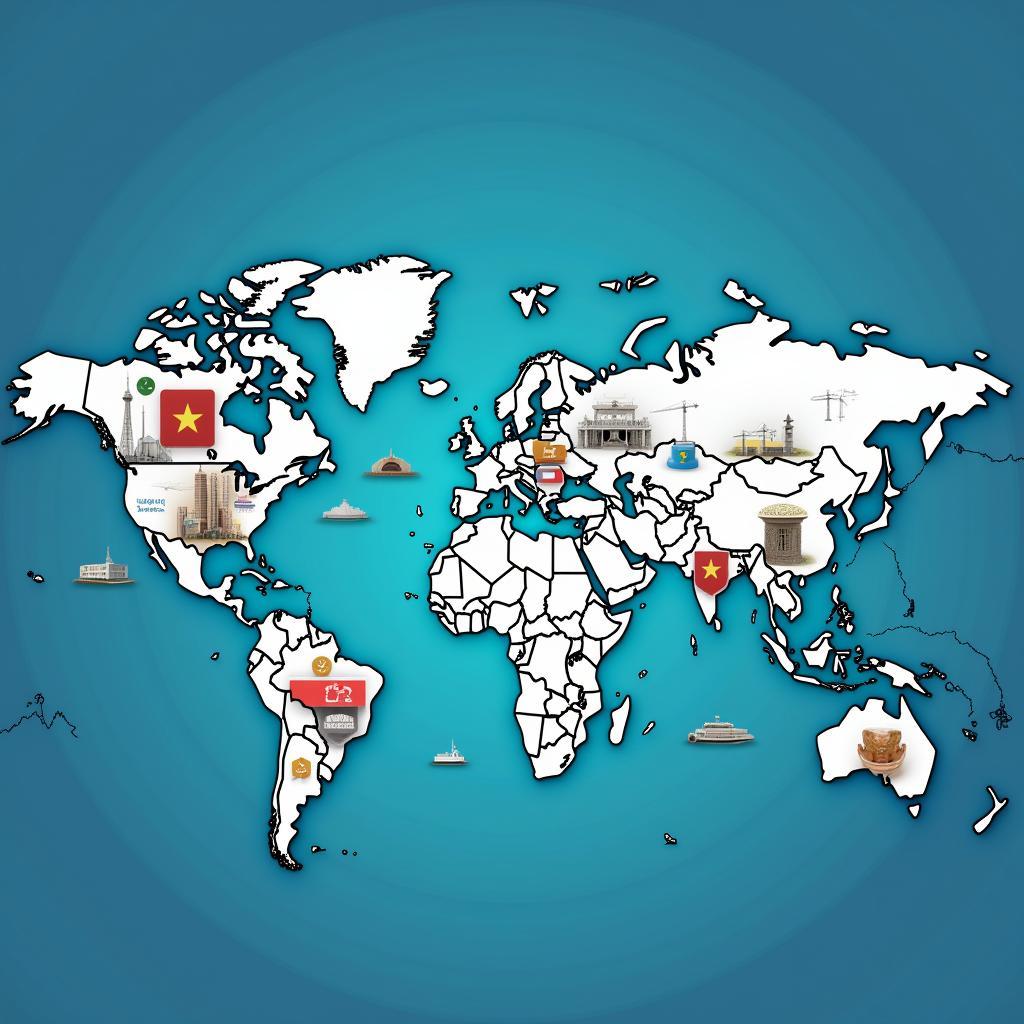
The 7th National Congress of the Communist Party of Vietnam (1991) marked a significant shift in the country’s foreign policy, transitioning from confrontation to international integration. This congress prioritized diversifying and multilateralizing international relations to foster a peaceful and stable environment for national development.
Historical Context and Foreign Policy Priorities of the 7th Congress
The post-Cold War era ushered in a period of rapid global transformation. Recognizing the need to adapt, the 7th Congress prioritized normalizing relations with other countries, particularly neighboring nations and major powers. This aimed to break Vietnam’s isolation, open doors for economic cooperation and foreign investment, and reaffirm its sovereignty and territorial integrity. Existing Party policies were adjusted to align with this new direction.
Diversification and Multilateralization of International Relations
The 7th Congress advocated for diversifying and multilateralizing international relations, avoiding dependence on any single nation. Vietnam actively engaged in international and regional organizations like ASEAN and the United Nations, enhancing its international standing and prestige. Participating in global forums also provided opportunities to learn from other countries’ development experiences.
Peace, Stability, and Economic Development
The foreign policy priorities of the 7th Congress aimed to create a peaceful and stable environment conducive to economic development. Vietnam committed to resolving disputes peacefully through negotiation and dialogue. This policy facilitated foreign investment and promoted economic growth. Brunei’s investment policies could serve as a reference for Vietnam in attracting investment.
Impact of the Foreign Policy
The foreign policy adopted at the 7th Congress yielded significant achievements, contributing to Vietnam’s socio-economic development. The country emerged from isolation, expanding relations with numerous nations worldwide. This policy also facilitated international economic integration. Understanding what exchange rate policy is provides further context for this integration.
Vietnam's international economic integration.
Conclusion
The foreign policy priorities of the 7th Congress were a pivotal turning point, laying the foundation for Vietnam’s development and international integration. This policy fostered a peaceful and stable environment, promoted economic growth, and elevated Vietnam’s international standing. Further exploration of rice support policies and loan packages from the Vietnam Bank for Social Policies offers a broader perspective on Vietnam’s socio-economic development policies.
For assistance, please contact us at Phone: 0968239999, Email: [email protected] or visit us at: TT36 – CN9 Road, Tu Liem Industrial Zone, Phuong Canh Ward, Nam Tu Liem District, Hanoi. We have a 24/7 customer service team.