“As tight as a tire” – this phrase emphasizes the importance of tires for any vehicle. And within each tire lies a small but crucial component: the tire valve. What role does this tiny part play? Why should we pay attention to it? Let’s delve in!
1. The Tire Valve: A Humble Yet Essential Gatekeeper
1.1. The Significance of the Tire Valve
The tire valve, also known as the tire inflation valve, is a small component located on the wheel rim. Its primary functions are:
- Inflation: Allows air to be pumped into the tire through a one-way valve, ensuring the tire pressure remains at a safe level.
- Pressure Retention: Prevents air from escaping, maintaining stable tire pressure during operation.
The tire valve can be likened to a diligent gatekeeper, silently safeguarding the airflow within the tire, ensuring your journeys are smooth and safe.
1.2. A Faulty Valve: A Hidden Danger
Many overlook the tire valve’s importance until a problem arises. A damaged or leaking valve can lead to:
- Underinflation: Causes increased fuel consumption, reduced tire lifespan, and even tire blowouts at high speeds.
- Reduced Vehicle Control: Underinflated tires make the vehicle unstable and difficult to control, especially when cornering or braking suddenly.
- Increased Accident Risk: Tire-related incidents pose significant dangers, directly impacting your safety and the safety of others.
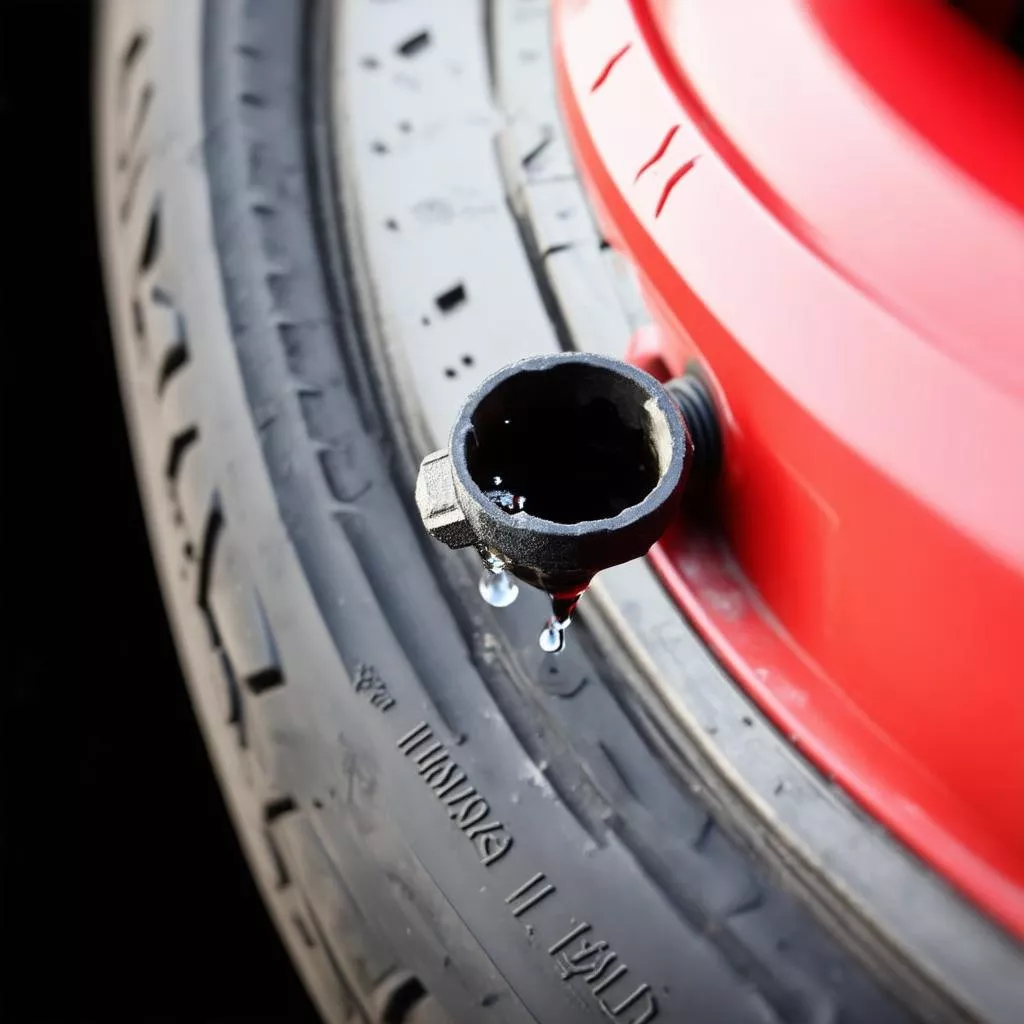
Leaking tire valve
2. Decoding the Mysteries Within the Tire Valve
Despite its small size, the tire valve has a complex structure, consisting of several components working in harmony:
- Valve Stem: Typically made of brass or aluminum, with threads for secure attachment to the wheel rim.
- Valve Core: The most crucial part, responsible for opening and closing the one-way valve, allowing inflation and retaining air pressure.
- Valve Cap: Protects the valve core from dust, water, and environmental contaminants.
Each component plays a vital role in ensuring the tire valve functions correctly and efficiently.
3. Common Types of Tire Valves
Currently, two main types of tire valves are common:
- Schrader Valve: The most prevalent type, used in most passenger vehicles.
- Presta Valve: Commonly found on bicycles, racing cars, featuring a smaller and lighter design.
The appropriate valve type depends on the vehicle and its intended use.
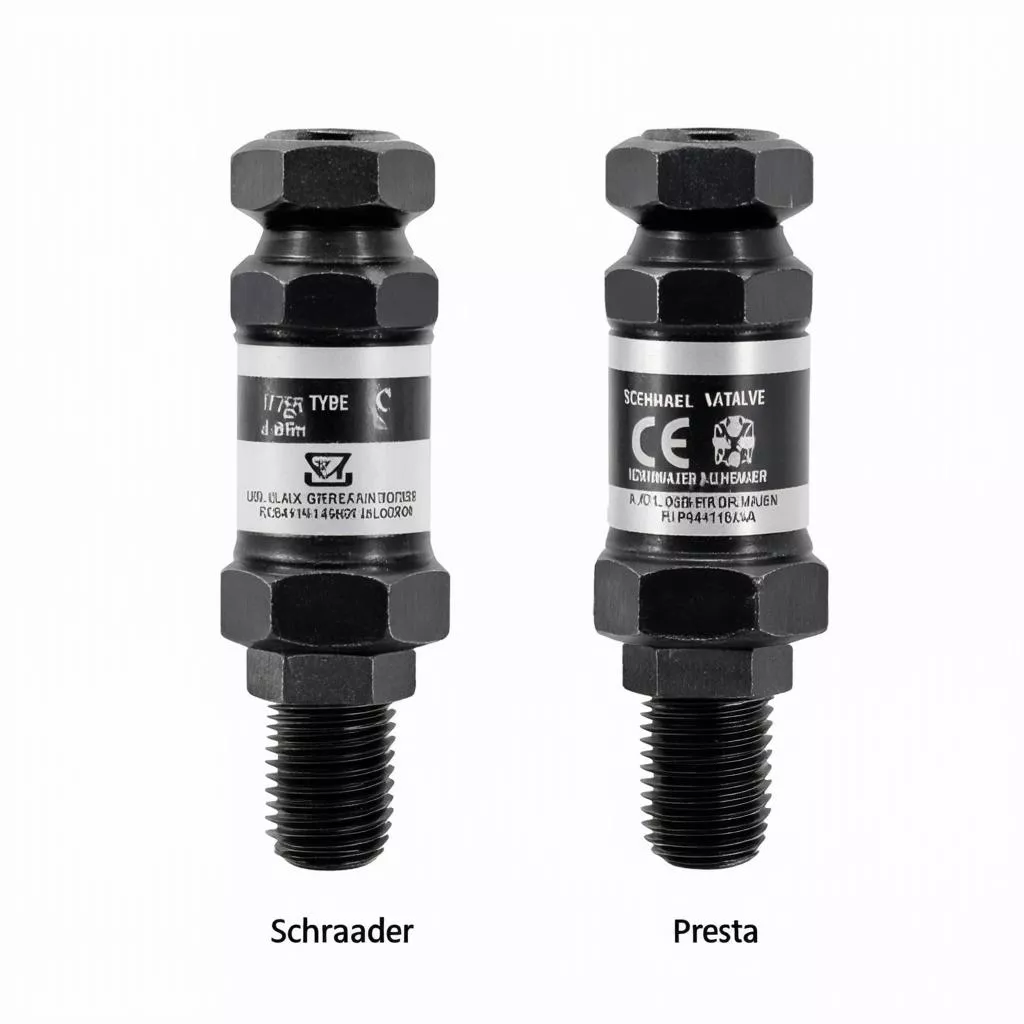 Types of tire valves
4. When to Replace Your Tire Valves
Like other car parts, tire valves have a limited lifespan. Here are some signs indicating a need for replacement:
- Rust and Corrosion: Leads to air leaks, affecting tire pressure.
- Damaged Valve Core: Prevents inflation or air retention.
- Missing or Damaged Valve Cap: Allows dust and water to enter the valve core, causing damage.
Experts recommend replacing tire valves every 5-7 years or after each tire repair.
5. Frequently Asked Questions About Tire Valves
Question 1: How much does a tire valve cost?
Answer: Tire valves are inexpensive, costing only a few dollars each.
Question 2: Where can I get my tire valve replaced reliably?
Answer: You can have your tire valve replaced at reputable auto repair shops or tire service centers.
Question 3: How can I maintain my tire valves for longevity?
Answer: Regularly inspect and clean your tire valves, avoiding contact with chemicals and grease.
6. Learn More About Tires
7. Contact Us Today!
This article provided valuable insights into tire valves. We hope it clarified their importance, enabling you to maintain and replace them promptly for safe travels.
For more information or any questions about trucks, contact XE TẢI HÀ NỘI Dealership or call our Hotline: 0968 239 999. We’re available 24/7 to assist you!









