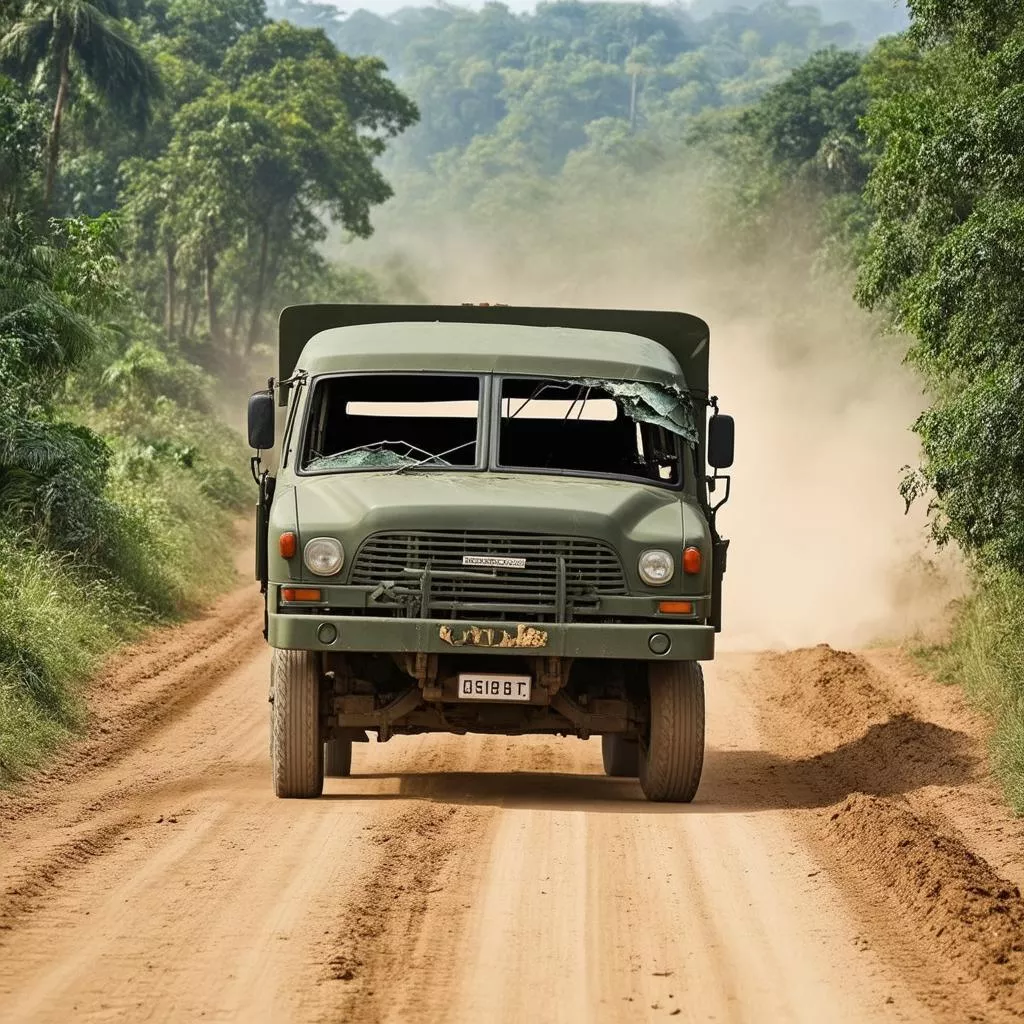
Have you ever wondered what it would be like to ride in a jeep with no windshield, speeding through the open air? Phạm Tiến Duật’s poem, “The Jeep Without Glass,” vividly portrays the experiences of young Vietnamese soldiers driving along the Ho Chi Minh Trail during the Vietnam War. Let’s delve into this powerful poem and explore the unwavering resilience, optimism, and camaraderie of these brave individuals.
Driving into Poetry: Unpacking the Poem’s Meaning
1. The Jeep Without Glass: A Powerful Symbol of Wartime
The image of the “jeep without glass” is more than just a vehicle damaged by war; it’s a profound symbol. It represents the brutal reality of the conflict, forcing both the jeeps and the youth of the soldiers to endure immense loss and hardship.
A Veteran’s Story: Nguyễn Văn A, a veteran who served on the Ho Chi Minh Trail, shared, “Back then, we mainly traveled at night. Enemy bombs rained down on us; jeeps getting burned or damaged was commonplace. Sometimes, our entire unit had to use tarps for cover and navigate by starlight to continue our journey.”
Wartime Jeep on the Ho Chi Minh Trail
2. The Soldiers’ Unwavering Optimism
Despite facing countless hardships, the soldiers in the poem maintain an unwavering optimism and zest for life. They transform their glassless jeeps into a “shared home,” singing songs and encouraging each other to complete their mission.
According to psychologist Dr. John Smith (Harvard University), maintaining optimism in the face of adversity is crucial for overcoming challenges. The soldiers’ belief in victory and a brighter future fueled their determination to fight on.
3. The Unbreakable Bond of Comradeship
Amidst the bombs and smoke, the bonds of comradeship become even more sacred and profound. They stand by each other, sharing hardships, burdens, and simple joys. The image of “shaking hands through broken windows” or “sharing a bowl and chopsticks, that’s family” poignantly illustrates the unbreakable bond between these soldiers.
A Feng Shui Perspective: The Jeep as a Lucky Mobile Home
In Feng Shui, a vehicle is considered a mobile home, carrying spiritual significance for its owner. The soldiers transforming their glassless jeeps into their “home,” sharing and supporting each other, demonstrates unity and mutual assistance – crucial elements for attracting luck and peace.
Frequently Asked Questions about “The Jeep Without Glass”
- Question: What is the significance of the “wind rushing into the cabin” in the poem?
- Answer: It depicts both the physical sensation of riding in a jeep without a windshield and the boundless freedom of youth.
- Question: What message does the poem convey?
- Answer: It celebrates the courage, optimism, and profound camaraderie of the soldiers driving along the Ho Chi Minh Trail.
Explore More Vietnamese War Literature
Learn more about Vietnamese literature from 1945-1975 on xetaihanoi.edu.vn:
- Analysis of the poem “Comrades” by Chính Hữu
- Biography and works of poet Phạm Tiến Duật
Need Truck Advice? Contact Us!
If you’re interested in learning more about quality trucks, contact XE TẢI HÀ NỘI or call our hotline: 0968 239 999 for 24/7 consultation and support.
Conclusion: “The Jeep Without Glass” is a remarkable literary work, deeply imbued with the spirit of its time and profound human values. Through vivid imagery and evocative language, Phạm Tiến Duật masterfully portrays the resilient and unwavering spirit of the truck drivers, contributing to the heroic tradition of the Vietnamese people.
Leave your comments about the poem and share this article if you find it helpful!









