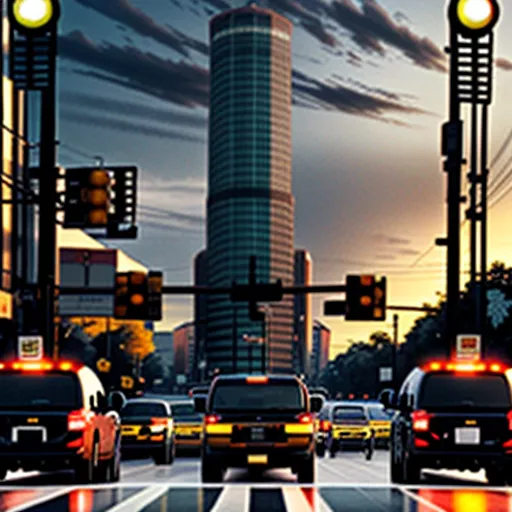
“I was clearly there first, why are you honking at me?” Have you ever witnessed heated arguments at busy intersections simply because drivers couldn’t determine who had the right of way? Traffic laws might seem dry, but they address crucial situations like this every day.
So how do you become a “master of the rules” on the road, especially when driving large vehicles like trucks? Let Hanoi Trucks decode the “right of way” puzzle in this article!
Decoding Vietnam’s Right of Way Rules
Introduction to Vietnam’s Traffic Laws
Vietnam’s Traffic Law is the guiding principle for all vehicles on the road, from motorbikes and cars to powerful trucks. Understanding these laws allows you to drive confidently, avoid unnecessary collisions, and most importantly, ensure the safety of yourself and others.
Specific Right of Way Regulations
So, who has the right of way?
- Vehicles on Priority Roads: Vehicles on priority roads have the right of way over vehicles on non-priority roads. Priority roads are usually indicated by priority road signs.
- Traffic Signals: Green means go, red means stop, and yellow signals a change in status… these are immutable rules that every driver must remember.
- The “Right-Hand Rule”: In the absence of traffic signals, the vehicle on the right has the right of way. For example, if a truck is traveling on Nguyen Trai Street and encounters a motorbike turning right from Cau Giay Street at an intersection, the truck has the right of way.
- Special Cases: The law also grants right of way to certain vehicles in special circumstances, such as emergency vehicles (fire trucks, ambulances) on duty and military convoys.
Important Considerations When Applying the Law
- Careful Observation: Even if you know the rules, careful observation of signs, traffic signals, and surrounding traffic is crucial.
- Maintain a Safe Distance: Especially when driving a truck, maintaining a safe distance from other vehicles is crucial for handling unexpected situations.
- Remain Calm: In case of disputes, remain calm, follow the instructions of traffic officers, or contact the authorities if necessary.
Busy intersection traffic in Vietnam
Frequently Asked Questions About Right of Way
A truck enters a narrow road; a motorbike comes from the opposite direction. Who yields?
In this scenario, the motorbike is responsible for yielding to the truck, as the truck is larger and has more difficulty maneuvering in tight spaces.
Mr. Nguyen Van A, a traffic behavior analyst at the Institute of Transport Research, stated: “Yielding in traffic, especially in narrow and crowded areas, is essential. It not only demonstrates responsible road behavior but also helps reduce congestion and accidents.”
Arriving at a three-way intersection with no traffic signals, who has priority?
At a three-way intersection without traffic signals, apply the “right-hand rule.” The vehicle to your right has the right of way.
What should you do if someone refuses to yield?
Remain calm and avoid arguments or aggressive behavior. You can use your horn to signal or yield to ensure your own safety.
Hanoi Trucks – Your Trusted Source for Trucks
Are you looking for a quality truck at a reasonable price? Come to Hanoi Trucks – we offer a wide range of trucks with various load capacities to suit all your transportation needs.
Learn More:
 Hyundai truck
Conclusion
Understanding Vietnam’s right of way rules is key to confident driving and minimizing the risk of accidents. Staying updated on traffic laws will help you become a safe and responsible driver.
Share this article with your friends and family to promote a safe and civilized traffic culture!









