
US foreign policy is a complex and ever-evolving subject. This article provides an overview of US foreign policy, including its main goals, strategies, and challenges.
Goals of US Foreign Policy
US foreign policy is shaped by several objectives, including:
- Protecting National Security: This is the primary goal of US foreign policy. The US seeks to protect its territory, people, and interests from external threats.
- Promoting Economic Prosperity: The US strives to create an international environment favorable to its economic growth through free trade, foreign investment, and economic cooperation.
- Maintaining a Rules-Based International Order: The US believes that a rules-based international order is essential for global peace and stability. The US actively participates in international organizations and promotes international law.
- Championing Human Rights and Democracy: The US supports human rights and democracy worldwide. The US believes these values are fundamental to a just and prosperous world.
Strategies of US Foreign Policy
To achieve these goals, the US employs various strategies, including:
- Diplomacy: The US uses diplomacy to build relationships with other nations, resolve conflicts peacefully, and foster international cooperation.
- Economic and Development Assistance: The US provides economic and development assistance to developing nations to help them improve living conditions and promote economic growth.
- Military Strength: The US maintains a strong military to deter threats and protect its interests. The US also uses military force when necessary to respond to security threats.
- International Cooperation: The US collaborates with other nations through international organizations to address global issues such as climate change, terrorism, and nuclear proliferation.
US Foreign Policy: International Cooperation
Challenges to US Foreign Policy
US foreign policy faces numerous challenges in the 21st century, including:
- The Rise of China: The rise of China as an economic and military power poses significant challenges to the US.
- International Terrorism: International terrorism remains a serious threat to the security of the US and its allies.
- Climate Change: Climate change is a global challenge that requires international cooperation.
- Nuclear Proliferation: The spread of nuclear weapons is a threat to international peace and security.
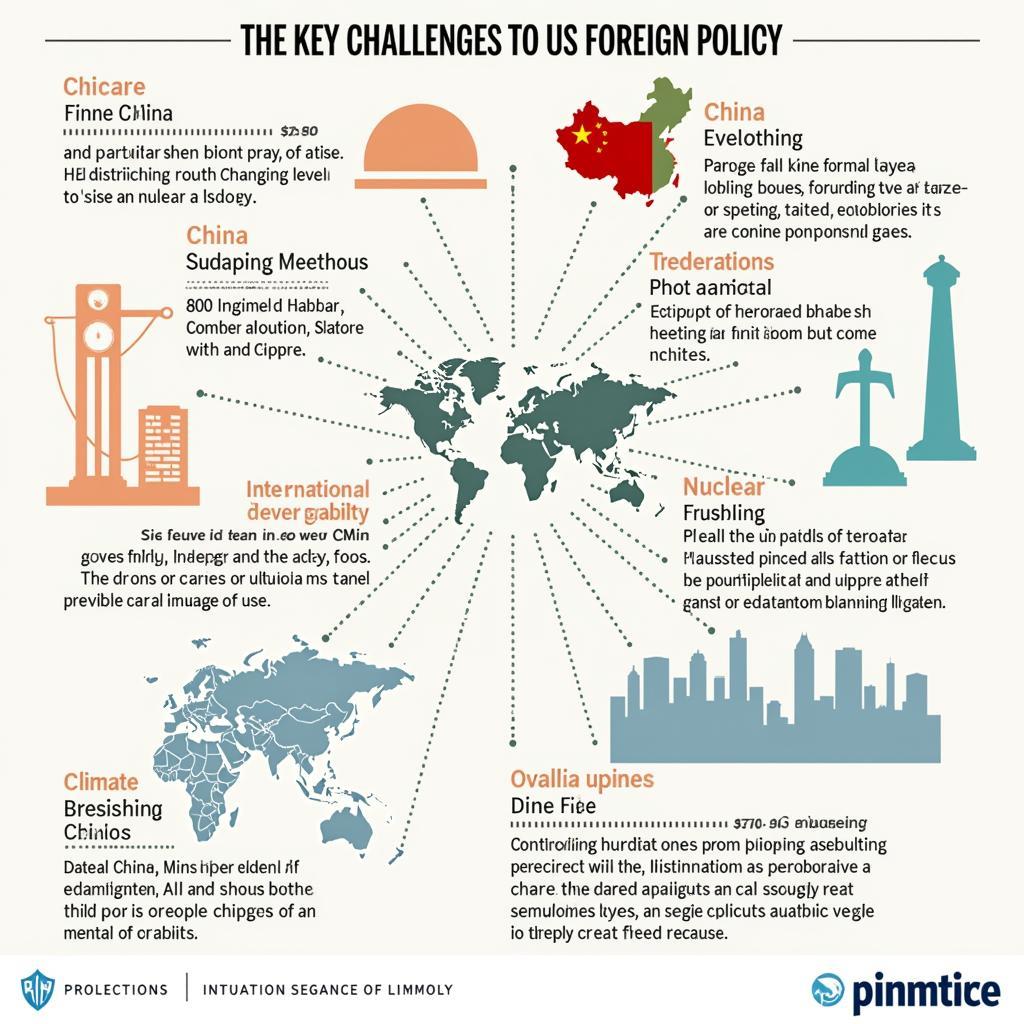 US Foreign Policy: Emerging Challenges
Conclusion
US foreign policy is a complex and constantly evolving subject. Understanding the goals, strategies, and challenges of US foreign policy is essential to understanding the US’s role in the international arena.
FAQ
- What is the primary goal of US foreign policy? Protecting national security
- What strategies does the US use in its foreign policy? Diplomacy, economic assistance, military strength, and international cooperation
- What is the biggest challenge to US foreign policy today? The rise of China and international terrorism
- What role does the US play in international organizations? The US is an active and influential member of many international organizations
- How does US foreign policy affect the global economy? US trade and investment policies have a significant impact on the global economy
- How can I learn more about US foreign policy? Research official sources from the US government and international research organizations
- How has US foreign policy changed over time? US foreign policy constantly adapts to the changing international landscape.
Suggested Further Reading
- Learn more about box trucks.
- Find information on light-duty trucks.









