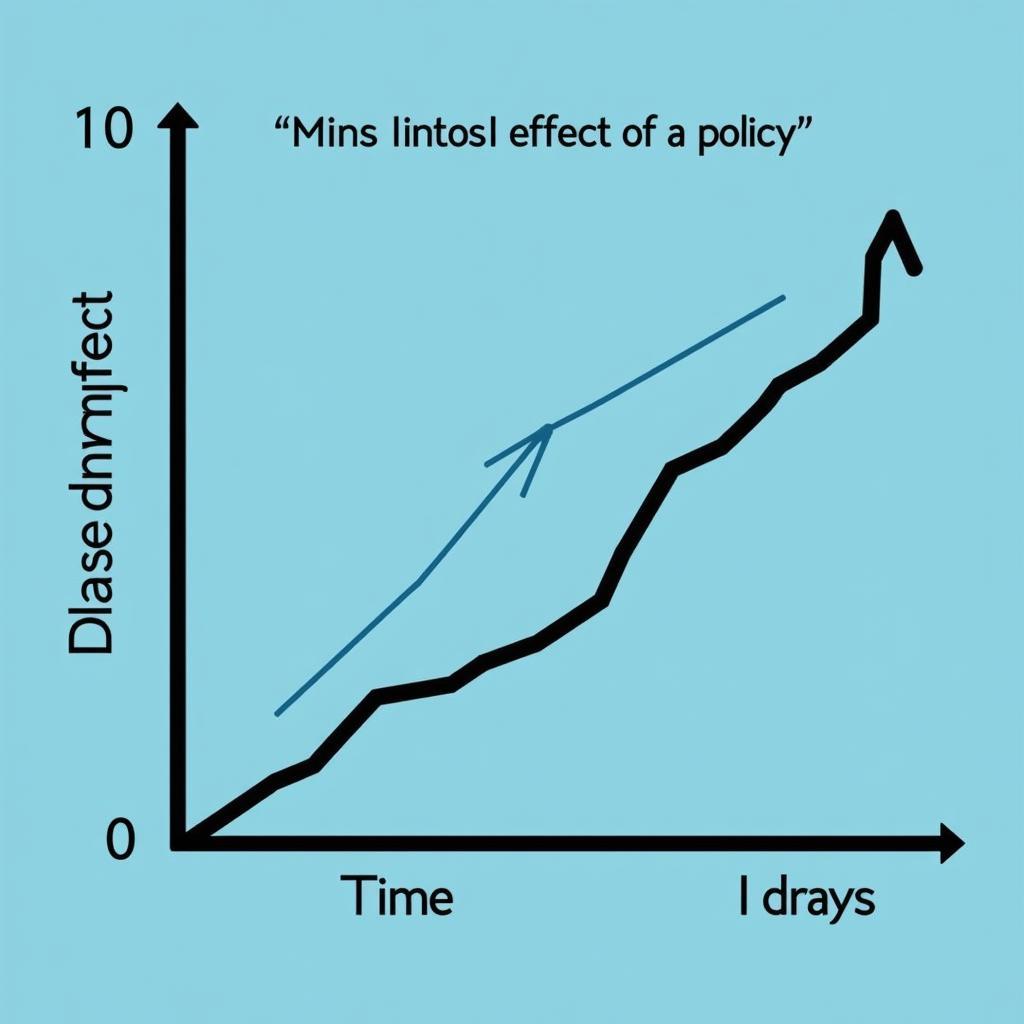
Policies, whether in business or life, have a definite impact. However, the effects aren’t always immediate. Some policies require time to yield results, a phenomenon known as “policy lag.” What is policy lag, why is it important, and how can we predict and leverage it?
Graph illustrating policy lag
Defining “Policy Lag”
Policy lag refers to the time elapsed between the enactment and implementation of a policy and the point when its impacts become clearly observable. For instance, after a policy supporting small and medium-sized enterprises (SMEs) is implemented, it might take months or even years for these businesses to access resources, expand production, and create new jobs.
The Importance of Policy Lag
- Informed Decision-Making: Understanding policy lag enables policymakers to make more informed decisions, avoiding hasty adjustments before results materialize.
- Accurate Evaluation: Neglecting policy lag can lead to a skewed assessment of a policy’s true impact.
- Patience and Forecasting: Awareness of policy lag fosters patience with new policies and allows for better predictions of future changes.
Factors Influencing Policy Lag
- Policy Type: Fiscal policies often have a quicker impact than monetary policies.
- Economic Climate: During recessions, policy effectiveness can be delayed due to risk aversion.
- Human Behavior: The reactions of individuals and businesses to new policies also affect the speed of impact.
Leveraging Policy Lag
- Thorough Research: Before enacting a policy, thoroughly research factors influencing policy lag.
- Clear Communication: Clearly explain the policy’s expected lag to the public and businesses.
- Monitoring and Evaluation: Closely monitor the policy’s effectiveness over time and make adjustments as needed.
Conclusion
Policy lag is a crucial factor to consider when developing and implementing policies. By understanding policy lag, we can make more accurate decisions, objectively evaluate policy effectiveness, and optimize the positive impact of policies on the economy.
Frequently Asked Questions
- How long can policy lag last? The duration of policy lag varies greatly, ranging from a few months to several years, depending on the policy type and influencing factors.
- How can we differentiate policy lag from policy ineffectiveness? Continuous monitoring, evaluation, and data analysis can help distinguish between the two.
- Are there any policies without a lag effect? Most policies have a lag effect, although the extent can differ.
Common Scenarios
- Businesses not seeing benefits from a new support policy after a few months.
- Governments frequently changing policies due to concerns about effectiveness.
Related Articles
Contact Us
For assistance, please contact us by phone: 0968239999, Email: [email protected] Or visit us at: TT36 – CN9 Road, Tu Liem Industrial Park, Phuong Canh Ward, Nam Tu Liem District, Hanoi. We have a 24/7 customer support team.









